
Why Grind Concrete Before Garage Floor Coating Systems
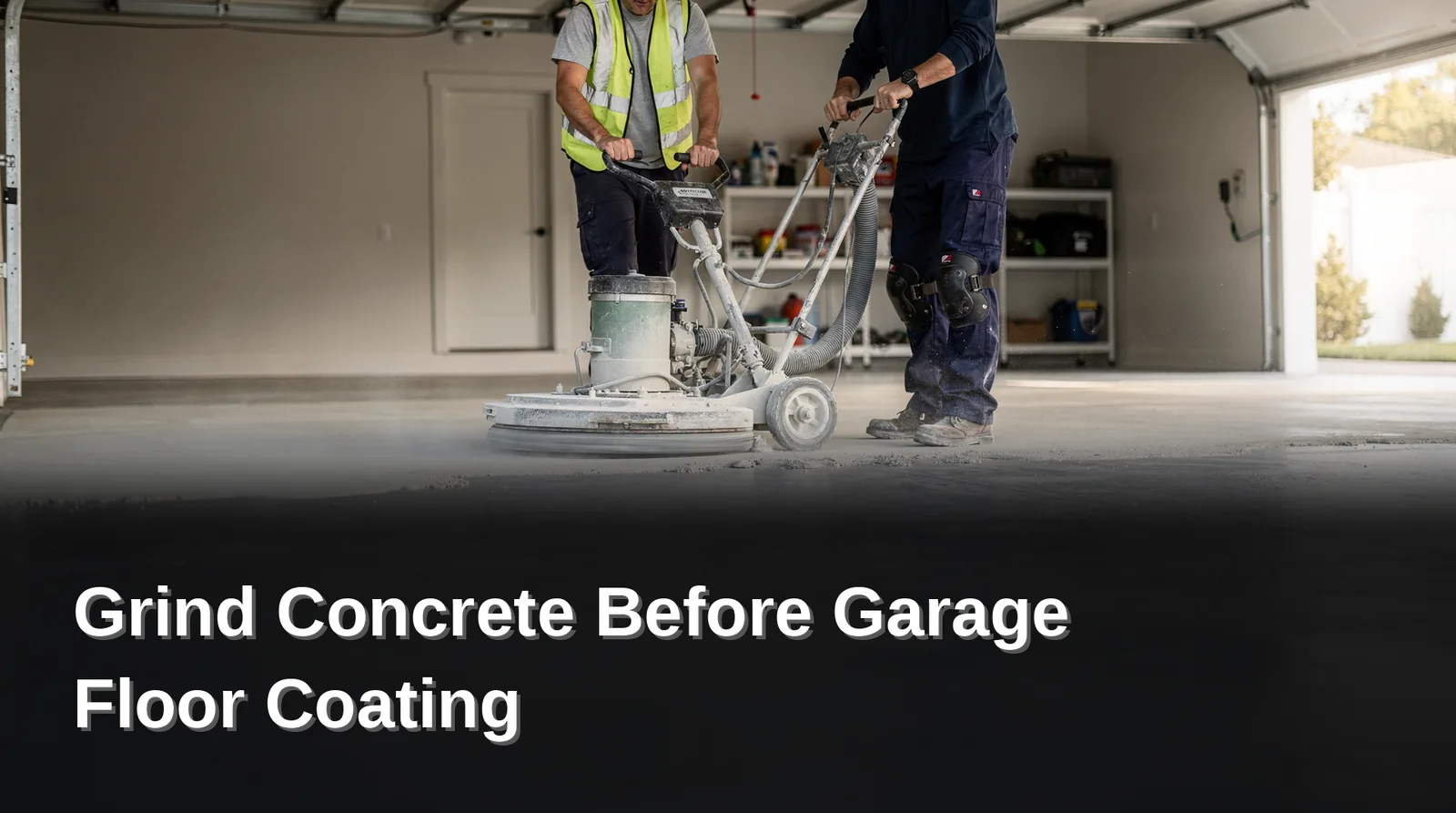
Concrete grinding removes surface contaminants, opens the pores of the slab, and creates the mechanical profile epoxy needs to bond permanently. Without this preparation, coatings peel and blister within months. Vital Flooring & Crawlspaces, a veteran-owned Wake Forest contractor, grinds every garage floor before applying epoxy flooring systems to ensure lasting adhesion.
Why Grind Concrete Before Garage Floor Coating?
Concrete grinding opens the slab's pores for a mechanical bond. Without this step, garage floor coating systems peel away from the surface within months. Homeowners who skip proper preparation risk costly failures that no manufacturer warranty covers. The concrete must receive a specific surface profile that only mechanical abrasion creates.
What Happens When Coatings Are Applied to Unground Concrete?
The coating sits on top of a weak surface layer rather than penetrating into the slab. Heat and pressure from vehicle tires soften the coating film. The coating then releases from the concrete, leaving bare patches that collect dirt and moisture. This failure mode, known as hot tire pickup garage floor, ruins garage floors within a single hot season. The Idaho Painter documented alternative no-grind methods in 2026. Industry consensus confirms that mechanical grinding produces the most reliable bond profile.
Preparing a garage floor properly follows three critical stages:
- Clean the surface and apply degreasing agents if oil contaminants or grease spots are present.
- Perform diamond concrete grinding garage floor preparation using diamond-encrusted tooling to abrade the surface.
- Remove all dust and debris, then profile the slab for coating adhesion before mixing any primer.
How Does Diamond Grinding Differ From Acid Etching?
Acid etching creates an inconsistent surface with chemical residues that interfere with adhesion. Professional garage floor prep through diamond grinding delivers uniform texture across the entire slab without introducing contaminants. The diamond abrasives cut into the concrete at a controlled depth, opening capillaries that the primer fills. This mechanical profile, described by EDCO Inc. in their surface preparation guidance, creates the strongest possible bond between slab and coating.
Polyaspartic vs epoxy garage floor systems both demand this preparation. Polyaspartic coatings cure faster and tolerate wider temperature ranges, but adhesion depends entirely on the concrete profile beneath. Epoxy coatings require the same surface texture to prevent delamination. Vital Flooring & Crawlspaces deploys licensed and insured contractors who execute diamond concrete grinding garage floor preparation on every project. The company's veteran-led approach ensures coating adhesion never becomes a liability for Triangle homeowners.
Flaking coatings cost far more to remediate than proper preparation costs upfront. A failed floor requires complete removal, re-grinding, and reapplication, doubling the project expense. Epoxy garage floor coatings installed over properly ground concrete deliver decades of service without peeling or blistering.
What Tools and Materials Do You Need?
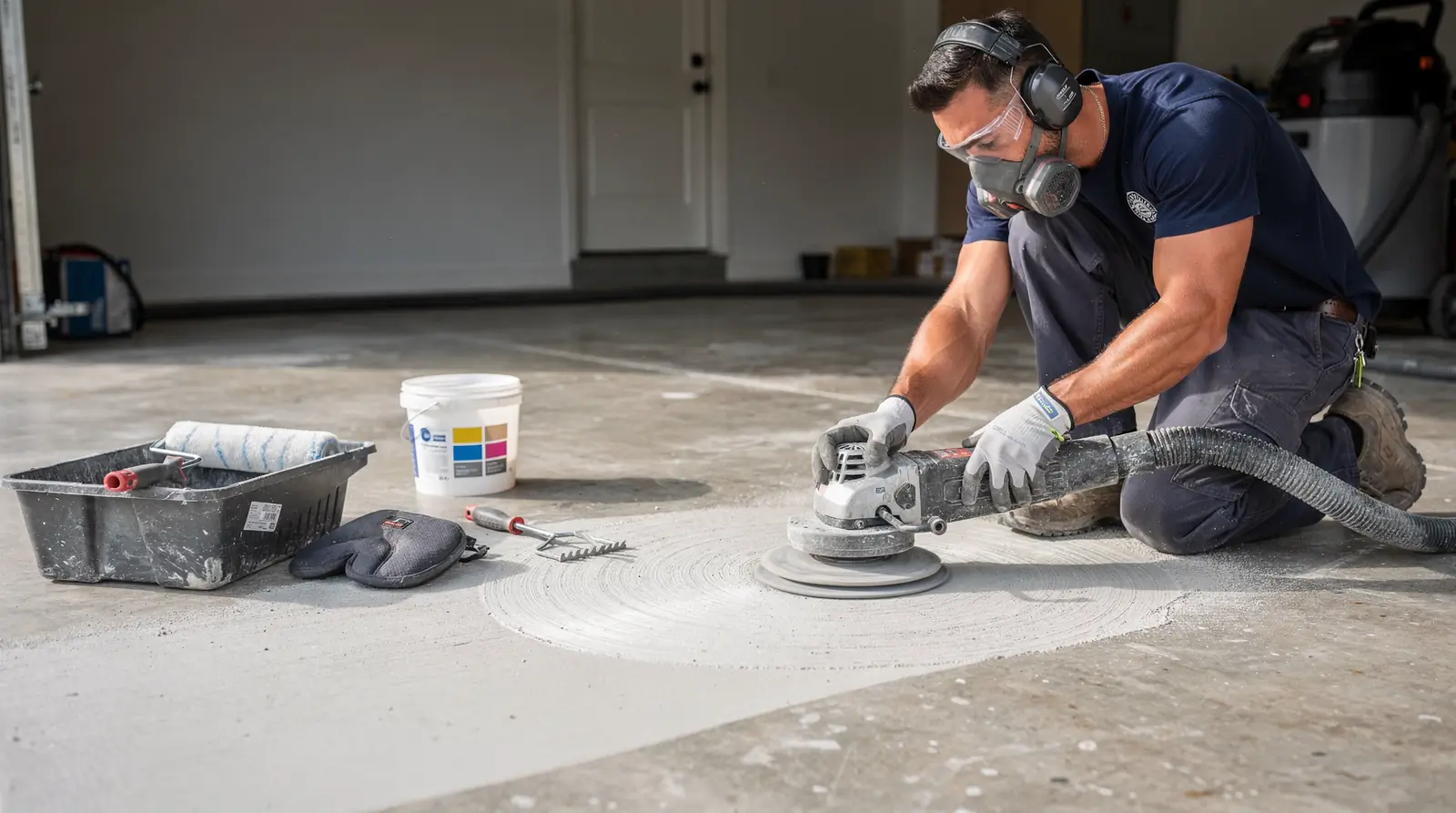
Professional concrete preparation demands specific tools and materials to achieve a lasting bond. Skipping any component risks delamination, blistering, and costly coating failure. The right equipment paired with proper technique separates a durable floor from one that peels within months.
What Type of Grinder Is Required for Concrete Prep?
A diamond concrete grinding garage floor process relies on a diamond-segmented grinder, such as a rented HD diamondbrush. This machine mechanically profiles the surface, removing laitance and opening the concrete's pores. Adequate profiling creates the anchor profile that coatings grip onto.
Do You Always Need to Degrease Before Grinding?
Degreasing is necessary only when the floor has visible grease spots or heavy soiling. A degreasing agent and power washer remove contaminants that grinding alone drives deeper into the concrete. For generally clean slabs, grinding without a chemical pre-wash suffices.
What Coating Materials Follow the Grinding Process?
After mechanical prep, the system includes a primer and a topcoat. A water-based primer seals the profiled surface, preventing outgassing and promoting adhesion. Homeowners choosing between polyaspartic vs epoxy garage floor systems weigh cure times and durability. Epoxy requires a longer cure but delivers a thick, hard film. Polyaspartic cures rapidly, often in one day, and resists hot tire pickup garage floor damage better in temperature extremes.
Professional garage floor coating systems bundle all materials with expert application. Professional garage floor prep from Vital Flooring & Crawlspaces includes the diamond grinder, industrial degreasers, primers, and topcoats. The company brings military-precision preparation to every project. Clients avoid rental logistics, chemical handling, and the risk of insufficient profiling. Every material arrives on-site, matched to the slab's condition and the selected coating chemistry.
How Do You Prepare the Concrete Surface Before Grinding?
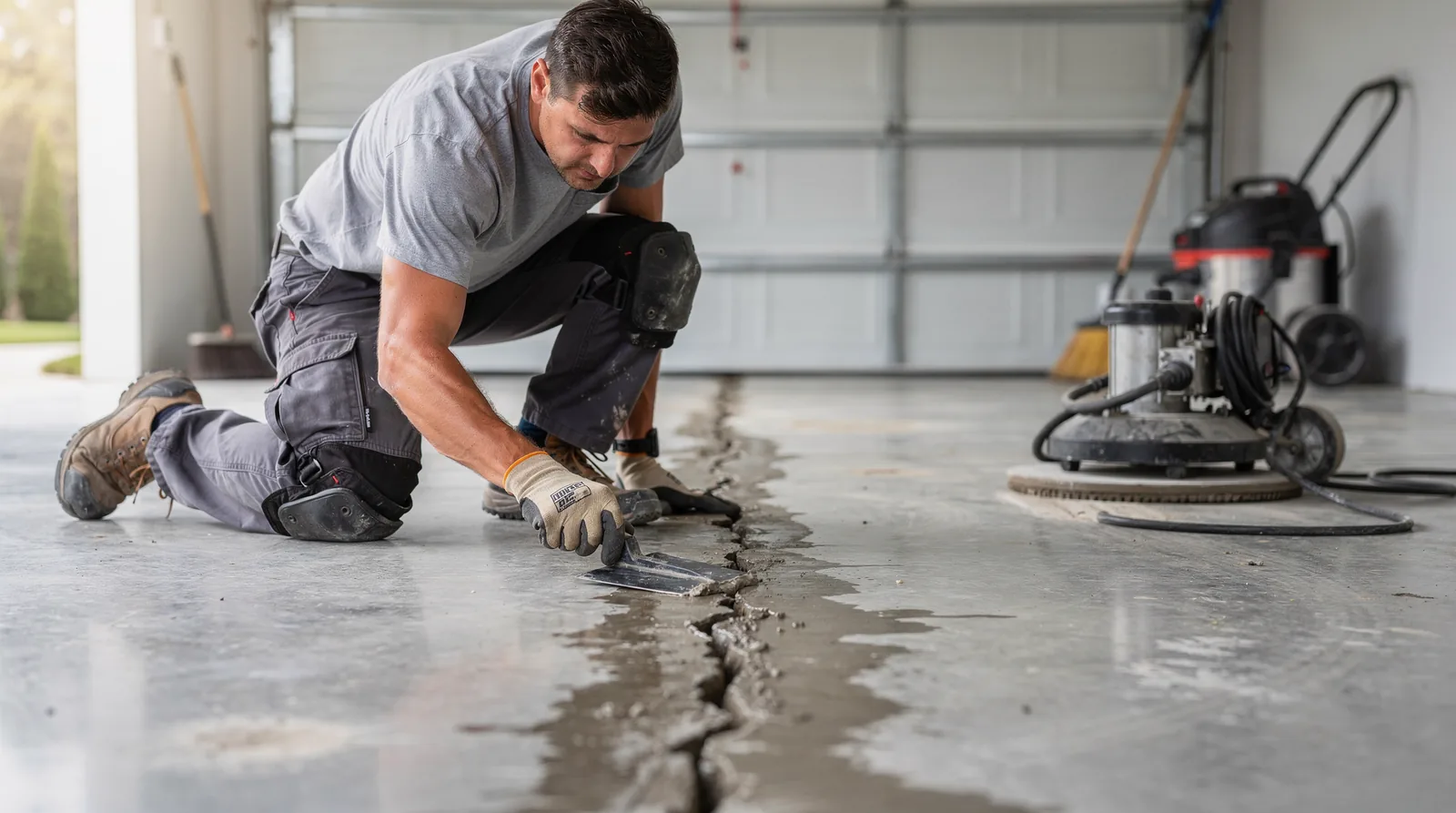
Surface preparation determines whether a garage floor coating system bonds permanently or peels within months. Skipping these steps traps contaminants beneath the coating, causing adhesion failure that no topcoat can fix. Professional installers follow a strict pre-grind sequence to eliminate every bond-breaking variable.
What cleaning steps are required before grinding a garage floor?
A thorough cleaning removes loose debris, oil stains, and surface grime that grinding alone cannot address. Start with a complete sweep of the floor to clear dust and loose particles. Next, degrease any visible oil spots or grease patches using an appropriate concrete cleaner. A power wash follows, blasting contaminants from the concrete's pores. The Garage Journal forum confirms this sequence: a quick clean, degrease, and power wash before grinding makes sense for proper preparation.
Is degreasing always necessary before concrete grinding?
Degreasing is not a universal requirement. The process applies only when the floor shows visible dirt accumulation or grease spots. A clean slab with no staining needs nothing more than a thorough sweep. This targeted approach saves time and avoids unnecessary chemical use while still protecting the epoxy bond.
How long must the concrete dry after washing?
Complete drying is non-negotiable. Moisture trapped beneath an epoxy coating creates a vapor barrier that pushes the coating off the slab over time. After power washing and brooming away standing water, the concrete requires full drying before grinding begins. Rushing this phase invites hot tire pickup garage floor failures and widespread delamination. Vital Flooring & Crawlspaces follows a transparent, straightforward process that treats drying time as a fixed requirement, never a shortcut opportunity. The company's licensed contractors handle every preparation step with the professionalism that Wake Forest homeowners expect from a veteran-owned operation.
What Are the Steps During and After Grinding?
Diamond concrete grinding garage floor preparation follows a precise sequence. Skipping any step compromises the bond strength of garage floor coating systems. The process opens the concrete’s pores, removes contaminants, and creates the profile that epoxy demands for adhesion.
How Do Professionals Grind Concrete for Epoxy?
The grinding phase itself requires methodical execution. Contractors use a diamond grinder to abrade the surface, often introducing a small amount of water to suppress silica dust. Keeping the surface consistently wet prevents slurry from drying and clogging the abrasive segments. Grinding proceeds in manageable sections, with each area rinsed immediately using a high-pressure nozzle. This wet method reveals low spots and surface imperfections that dry grinding can hide. The goal is uniform texture across the entire slab, not a polished finish. A dull, sandpaper-like profile signals readiness for coating.
What Happens Immediately After Grinding?
Post-grinding cleanup determines whether the coating bonds or fails. The sequence includes three non-negotiable actions:
- Power wash the entire floor. High-pressure water strips away grinding slurry and loosened contaminants from the concrete pores.
- Broom the surface aggressively. Stiff-bristle brooms dislodge stubborn debris trapped in the profile’s valleys.
- Dry the slab completely. Moisture trapped beneath epoxy causes delamination. Contractors verify dryness with moisture meters before proceeding.
Vital Flooring & Crawlspaces’ licensed contractors execute this professional garage floor prep as a standard part of every epoxy installation. The company’s team understands that why grind concrete before epoxy matters: mechanical abrasion creates a mechanical key that acid etching cannot replicate. Without this profile, coatings remain vulnerable to hot tire pickup garage floor failure. Warm rubber lifts the coating from a smooth surface. The grinding and cleanup sequence transforms a slick, non-porous slab into a receptive substrate ready for primer and topcoat.
What Common Mistakes Should You Avoid?
Homeowners frequently compromise garage floor coating systems by cutting corners on surface preparation or selecting the wrong materials. Skipping mechanical grinding represents the most consequential error a property owner can make. Poor adhesion leads directly to peeling, delamination, and that frustrating hot tire pickup garage floor damage where warm rubber literally tears the coating from the slab when a vehicle departs.
Why Is Skipping Concrete Grinding So Risky?
The Idaho Painter documented an experiment challenging the industry consensus that grinding is mandatory. Without mechanical abrasion or acid etching, epoxy adhesion suffers dramatically. The concrete surface requires a proper profile, a roughened texture that coatings mechanically grip. A smooth, unprofiled slab leaves nothing for the material to bond with. Over time, moisture vapor migrating upward pushes the coating free, and hot tires complete the destruction by lifting weakened sections clean off the floor.
How Do DIY Kits Lead to Premature Failure?
Big-box store epoxy kits carry another hidden risk beyond adhesion problems. These products yellow under UV exposure and peel within months, a stark contrast to professional polyaspartic vs epoxy garage floor systems where polyaspartic coatings resist ambering and cure faster. Homeowners often discover the cost difference evaporates when a DIY floor requires complete removal and replacement after a single season.
The professional garage floor prep process avoids these traps through methodical execution. After grinding, thorough drying is non-negotiable. Trapped moisture remains the silent killer of otherwise perfect installations, forming a barrier that prevents proper bonding. A rushed job that skips post-grind drying condemns the entire floor to early failure.
Vital Flooring & Crawlspaces approaches each project with a systematic, detail-driven process that eliminates these common pitfalls. Licensed contractors handle diamond concrete grinding garage floor preparation, moisture testing, and application, delivering coatings that bond permanently rather than peeling away after the first summer heat cycle. The company's methodology substitutes guesswork with proven technique, ensuring Wake Forest homeowners avoid the cycle of repeated floor coating failures that plague DIY attempts.
Conclusion
Grinding concrete before garage floor coating is not an optional step, it is the mechanical key that determines whether the coating bonds for years or peels within months. Homeowners who skip this preparation invite delamination, moisture failure, and hot tire pickup damage that no topcoat can fix. The decision comes down to choosing between a one-time professional installation and a cycle of repeated repairs. A properly ground, dried, and profiled slab delivers the permanent bond that protects the garage floor through every season.